Wednesday, July 29, 2026 – Orlando, Florida
“I wish to have no connection with any ship that does not sail fast; for I intend to go in harm’s way.” — John Paul Jones
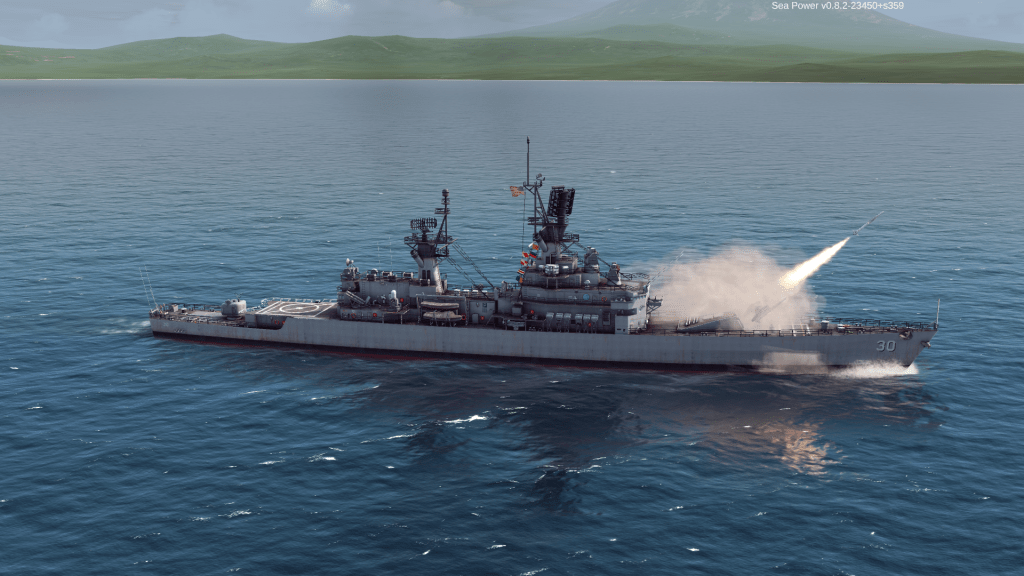
Why Pacific Strike ’85 Stands Out
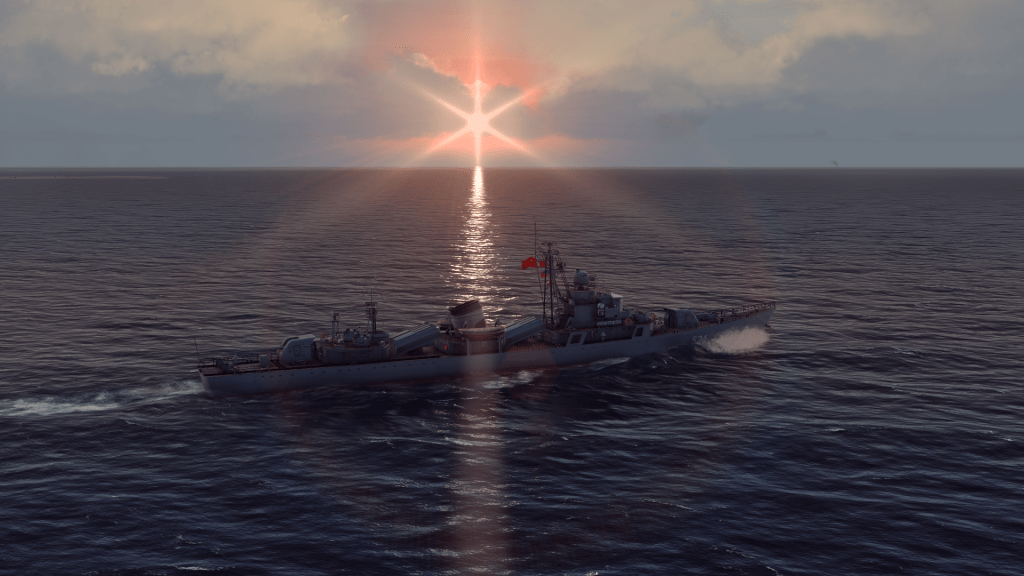
One of the things I love about Sea Power: Naval Combat in the Missile Age (MicroProse/Triassic Games) is its new Pacific Strike ’85 campaign, including Task Force mode. The developers added the campaign earlier this month as part of their ongoing effort to complete their Cold War-era naval simulation.
My Mixed Track Record with Campaigns
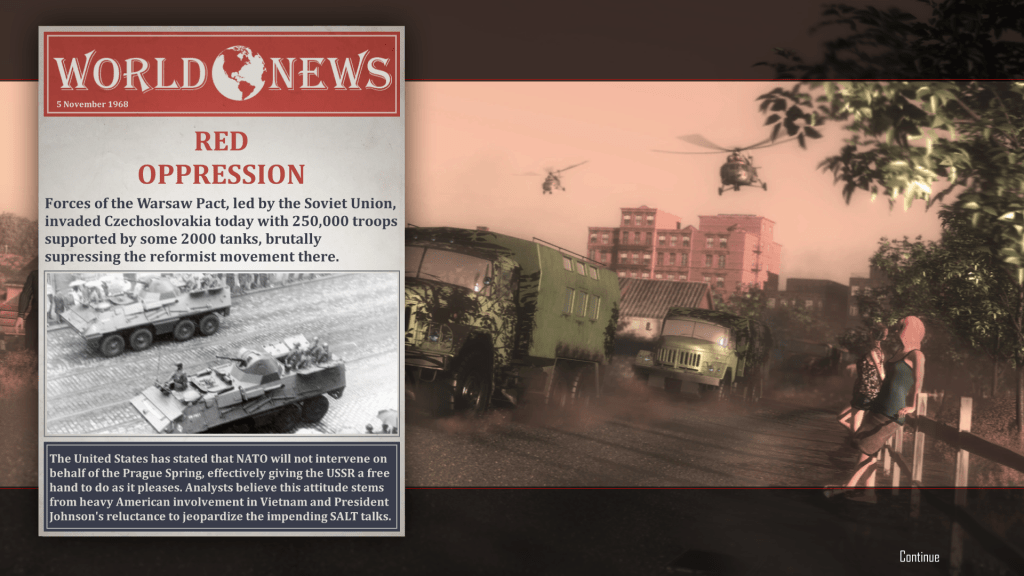
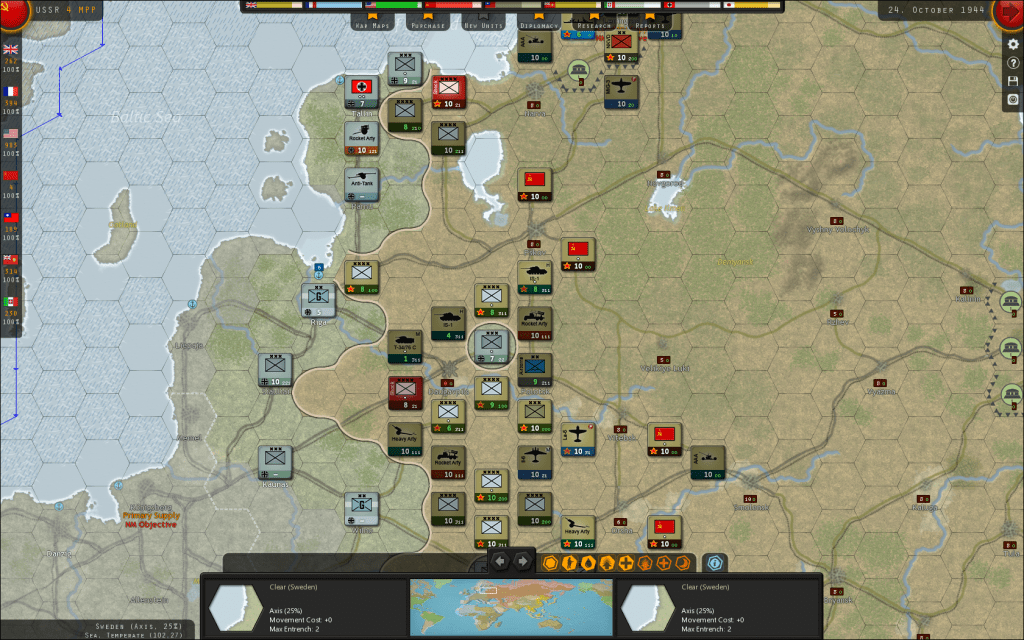
I’m usually not good at “grand campaigns” in most of the war games I own and play. I can be a decent commander in single-mission scenarios in games such as Regiments, Ultimate General: Civil War, and Second Front. But when it comes to managing land, air, or sea units over an extended conflict, my results vary depending on the genre and the complexity of unit management.

Since I began my current Steam-centric phase of gaming, I’ve completed campaigns only in a handful of titles: Strategic Command WWII: World at War, Cold Waters, and the reissued versions of M1 Tank Platoon and Crusade in Europe. Those games include some of the resource-management features found in simulations with multi-engagement campaigns, but they usually do not require players to micromanage logistics, repairs, replacements, or the economics of a national war effort.
What Task Force Mode Adds
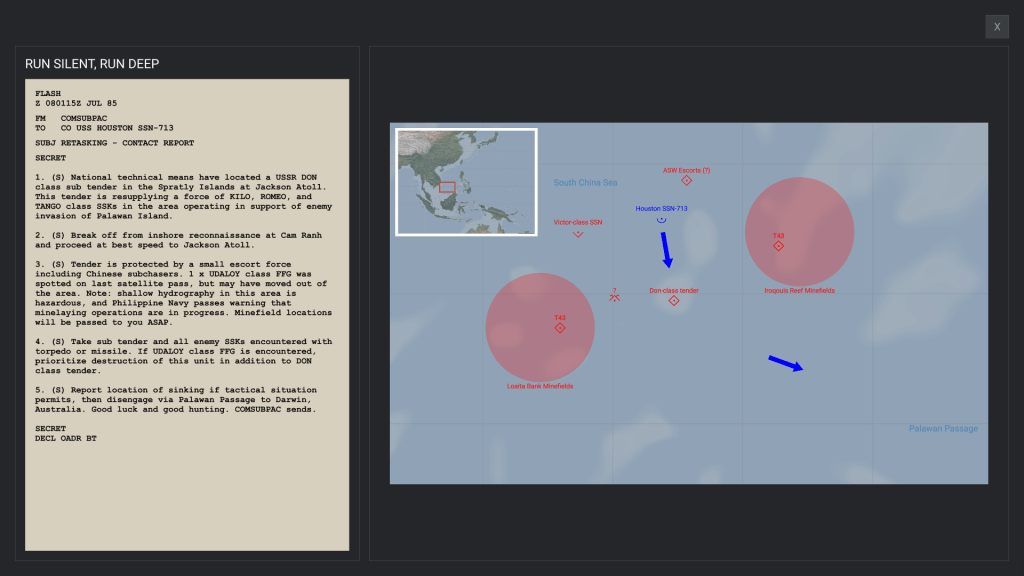
Pacific Strike ’85 introduces several new concepts to Sea Power’s persistent campaign mode. In addition to morale and experience boosts that affect how ships and crews perform in battle, the developers added Task Force mode. This lets players build, manage, and fight with customized task forces during a prolonged conflict in the Western Pacific.
As Triassic Games explained in its Steam announcement:
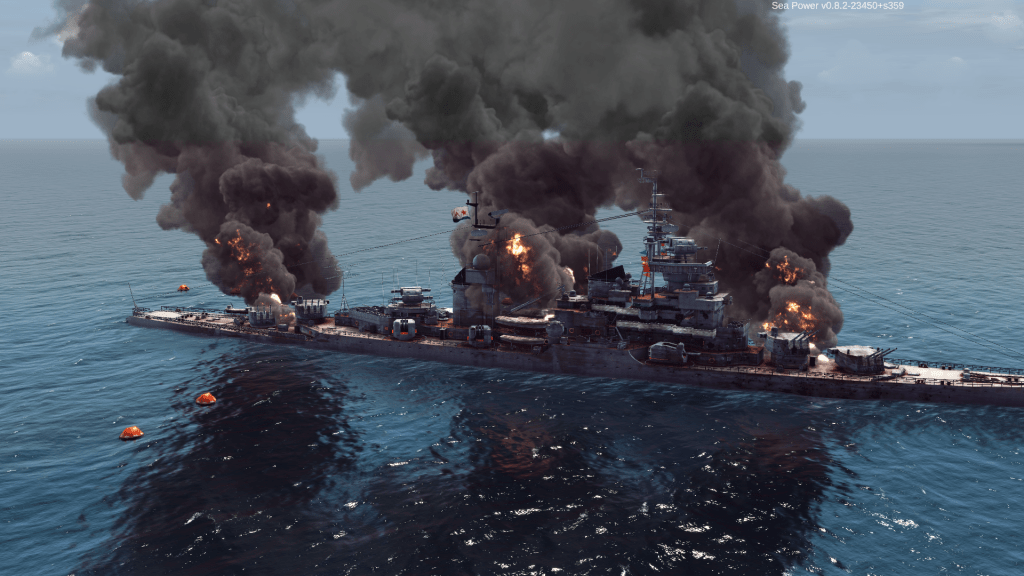
Task Force Mode. Instead of taking a fixed force into each mission, you build and customize your own task force, deploy it across linked operations, and manage the consequences over time. Ship and aircraft losses, weapon expenditure, damage, repairs, resupply, commander progression, and awards all carry forward through the campaign.
Progress So Far
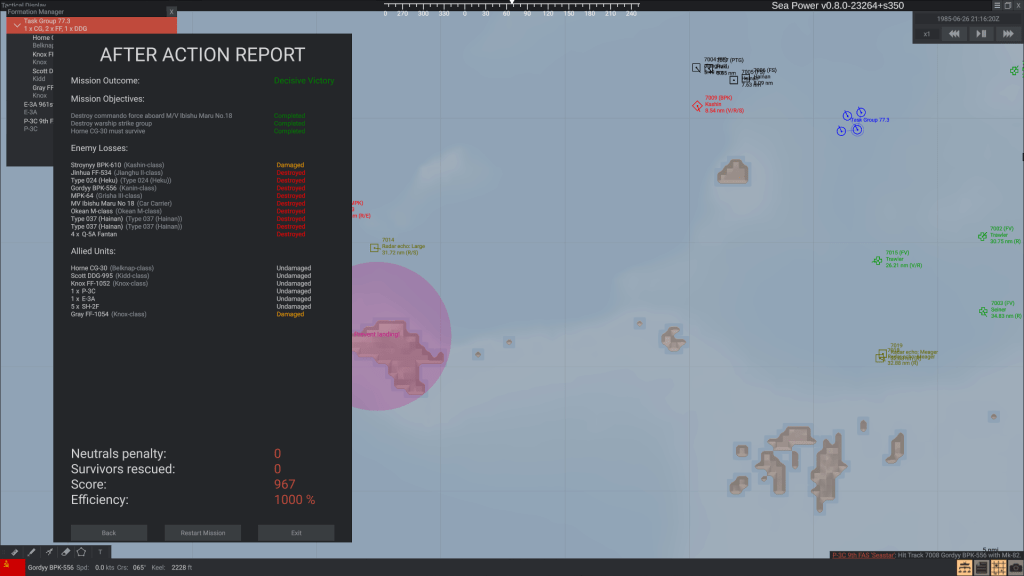
So far, I have completed four missions in the campaign:
- Raid on Okinawa
- Palawan Passage
- Lombok Strait
- Sunda Strait
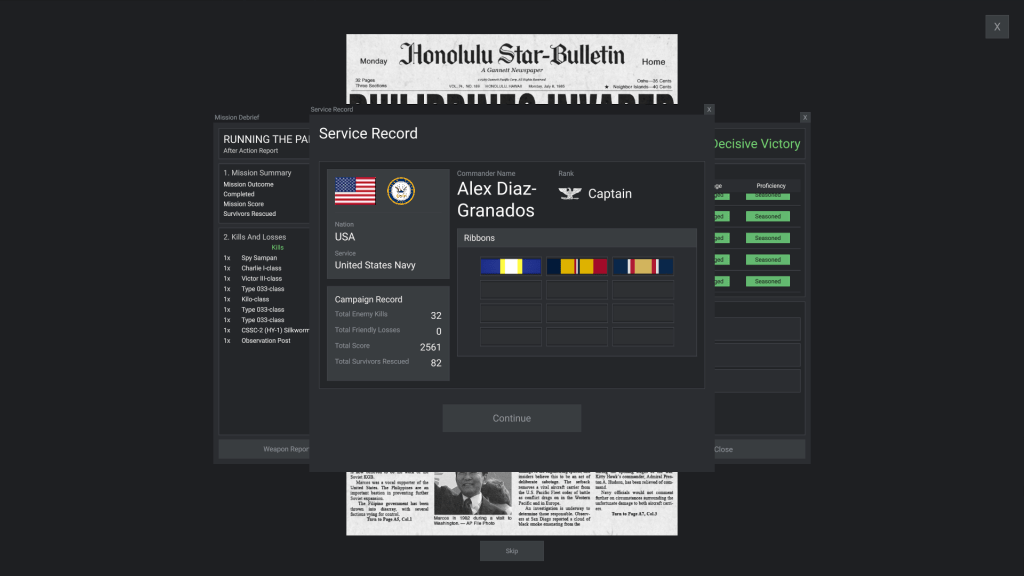
I began as a U.S. Navy captain commanding the four-ship Task Group 77.3, centered on the Belknap-class cruiser USS Horne. Since then, I have added two ships — including the destroyer USS Benjamin Stoddert—using points awarded for completing missions with minimal losses.
The campaign has not been completely uneventful. During Lombok Strait, the enemy managed to damage Horne slightly, and I lost an S-2H Sea Sprite helicopter in Sunda Strait. Still, I have won every engagement against the combined Soviet and Chinese forces in the Western Pacific. As of today, I have been promoted to Rear Admiral (lower half).
The Decisions Ahead
I’m still more confident in my skills as a naval commander in single missions, such as Hormuz, than I am in Campaign mode. The hardest part is the “between missions” phase, where I must decide how to spend limited points. My options include:
- Adding new ships or aircraft
- Repairing damage to existing ships
- Replacing older, less capable ships with newer and better-armed ones
- Saving points for more expensive vessels, such as Ticonderoga-class cruisers, Iowa-class battleships, or aircraft carriers like USS Nimitz
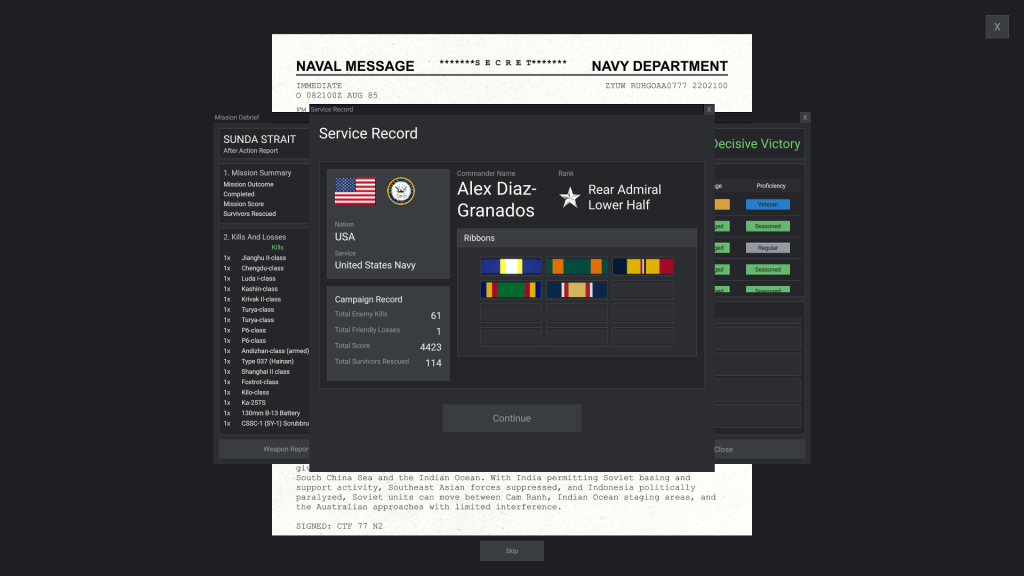
Now that I have finished Sunda Strait and arrived at Darwin, Australia, with Task Group 77.3, I have 372 points in the bank. I must decide whether to add another ship to the task group, purchase more aircraft for the Darwin airbase, or go to sea in search of the Soviet battlecruiser Kirov and her surface action group with the six ships I currently command. I have already spent 3 points repairing Horne; now I need to weigh my options carefully before heading in harm’s way again.


Share your thoughts with the world!