LONG REACH
Sixteen hundred miles from friendly air power, an American carrier force fought its way into a Soviet stronghold, destroyed it and left the city around it standing
By Catherine M. Hollis
TIME Correspondent
December 1986
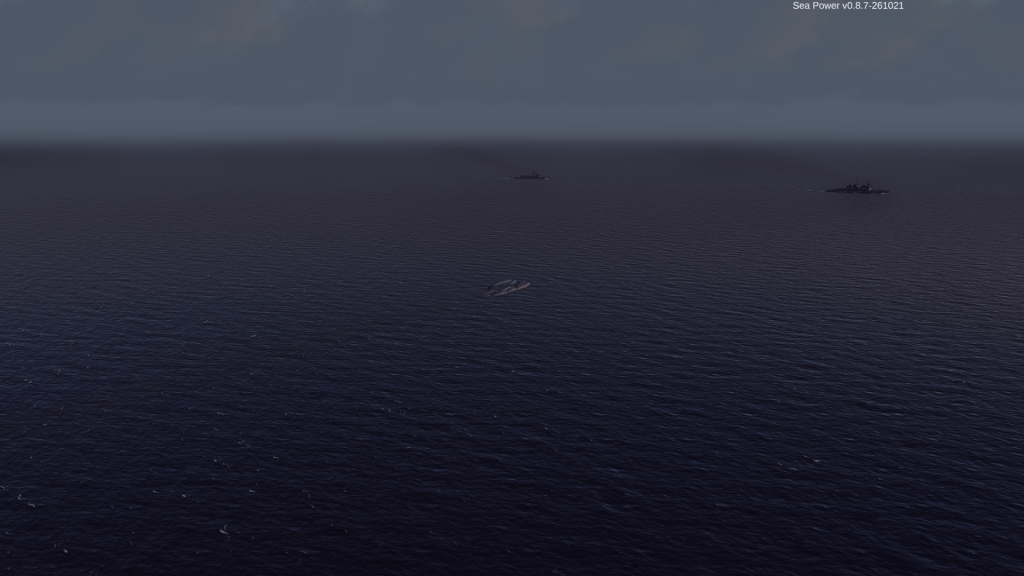
At 50 feet above the South Atlantic, a Tomahawk cruise missile has very little horizon.
There is water ahead, water below and, somewhere beyond both, a target. On the morning of Dec. 2, American missiles came toward Luanda from the sea at wave-top height. Some were headed toward Soviet military installations ashore. Others were hunting Soviet warships. Behind them came Navy aircraft, including an EA-6B Prowler assigned to interfere with enemy radar and three F/A-18 Hornets carrying Snakeye bombs for an attack on a fuel-storage complex.
The defenders were waiting.
Cuban MiG-23 fighters rose to meet the attack. Soviet Tu-16 Badger bombers came after the American ships. From beneath the ocean, a Soviet Charlie-class nuclear-powered cruise-missile submarine launched SS-N-9 antiship missiles at the task force.
For a time, Operation Long Reach was not an American raid on Luanda at all.
It was a battle.
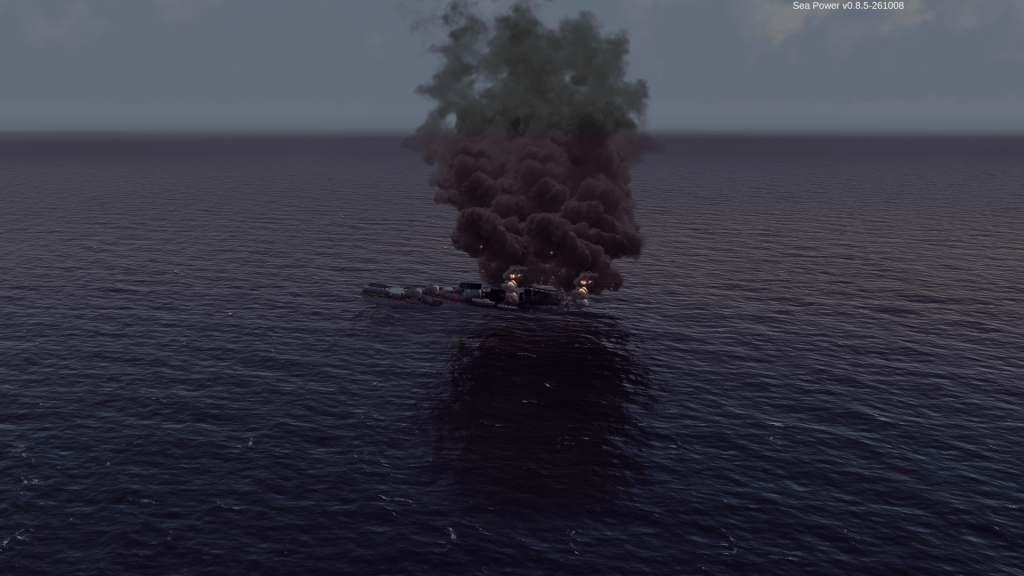
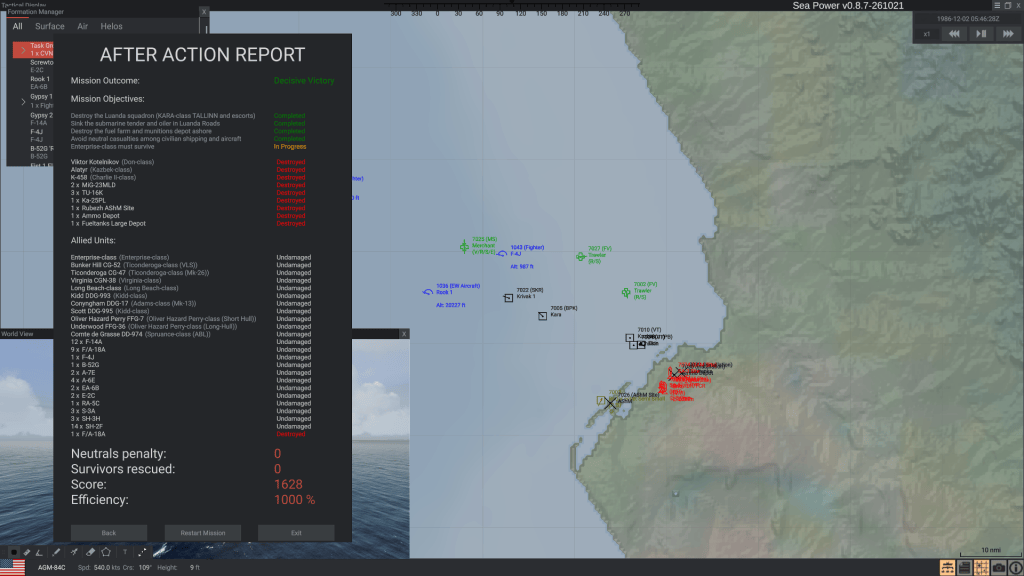
When it ended, the Soviet naval presence there had been wrecked. Warships and the support vessels that sustained them were sunk. Fuel and ammunition installations were destroyed. Enemy aircraft had been shot down. The Charlie submarine lay on the bottom of the Atlantic.
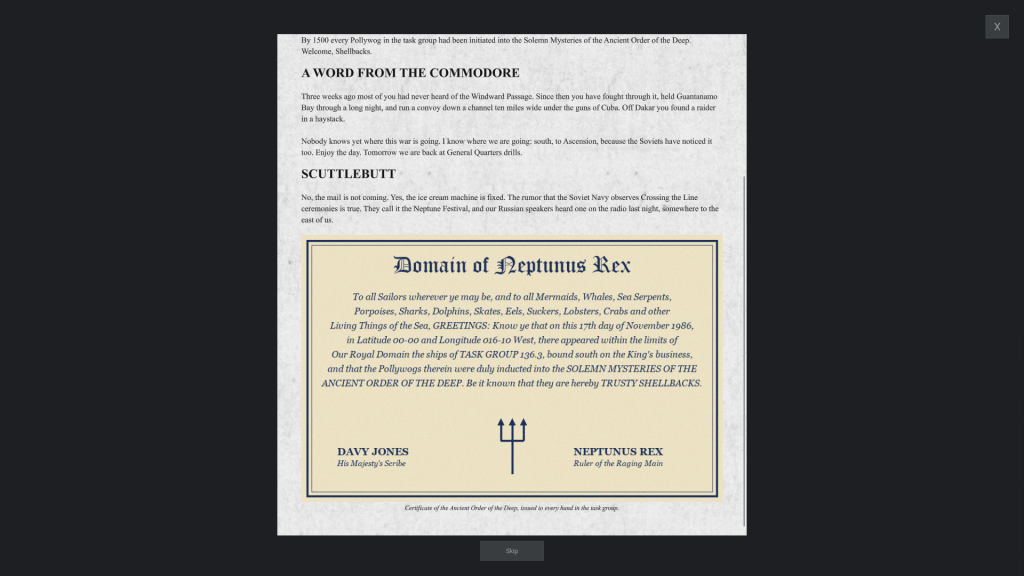
The American ships were undamaged.
Of the three Hornets sent against the fuel farm, two returned.
And Luanda itself was still standing.
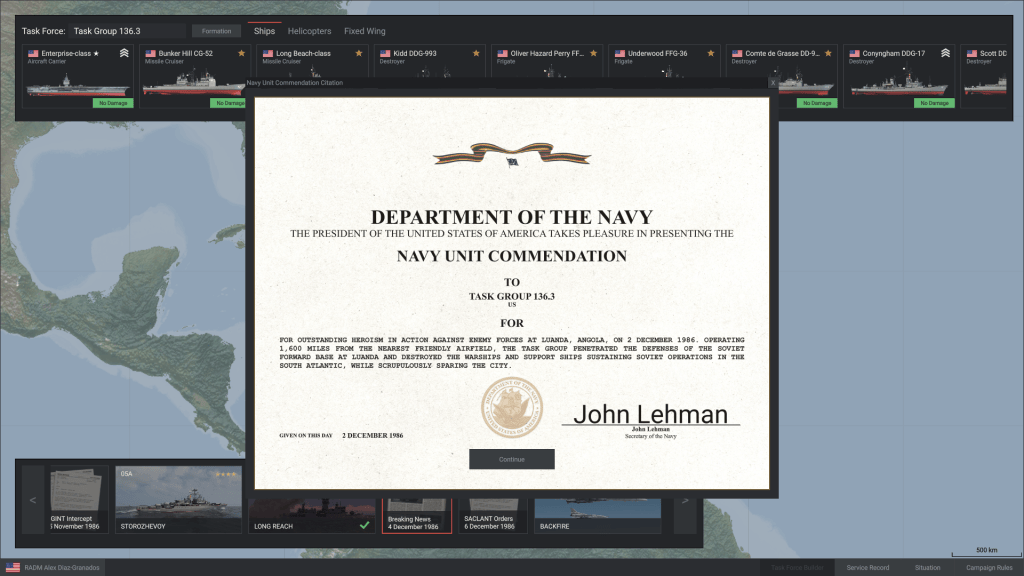
That last fact mattered enough to make it into the official citation. In awarding Task Group 136.3 the Navy Unit Commendation, the Navy praised the force for penetrating the defenses of the Soviet forward base and destroying the ships sustaining Soviet operations in the South Atlantic while “scrupulously sparing the city.”
War usually measures success by what is destroyed.
Operation Long Reach was also defined by what was not.
Sixteen Hundred Miles
The most revealing number associated with Long Reach may not be a tally of ships or aircraft.
It is 1,600.
That, according to the Navy citation, was approximately how many miles separated Task Group 136.3 from the nearest friendly airfield as the force attacked Luanda.
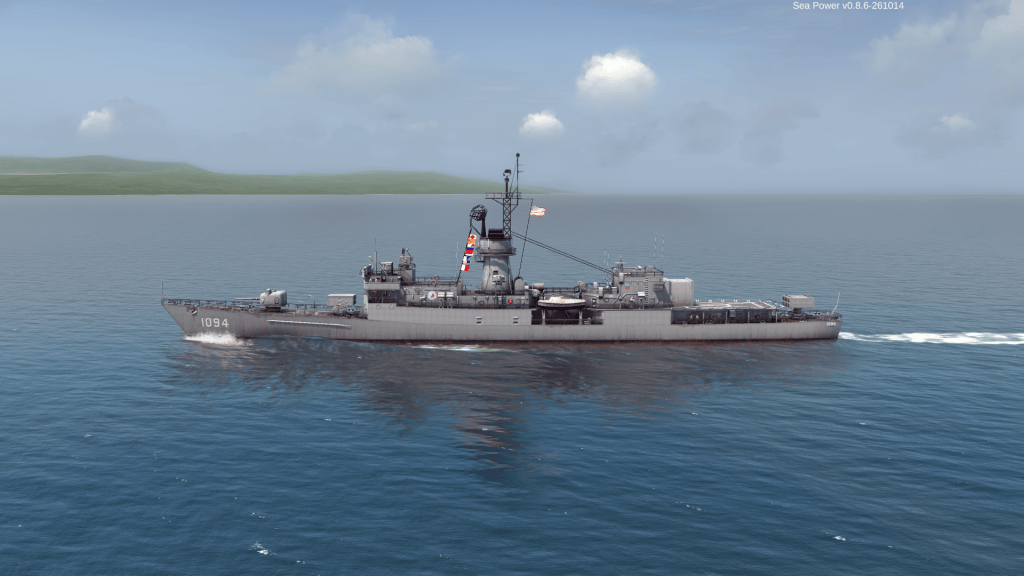
At the center of the operation was the nuclear-powered aircraft carrier USS Enterprise, accompanied by a formidable screen of cruisers, destroyers and frigates. Together they constituted something more than a collection of warships. They were a mobile system of airfields, missile batteries, radars, electronic countermeasures and antisubmarine weapons.
The geography that might once have sheltered a distant naval base had become less protective.
Luanda was far from friendly American land-based tactical air power.
It was not far enough from the U.S. Navy.
The Soviets had used the Angolan port as a forward base supporting operations in the South Atlantic. American commanders therefore faced a more difficult problem than simply finding Soviet warships and sinking them.
They had to dismantle the machinery that kept those ships at sea: auxiliaries, fuel, ammunition and shore facilities.
And they had to do so without making the Angolan capital itself the target.
The Defenders Come Out
If the Americans hoped surprise would spare them a fight, the hope did not last.
Cuban MiG-23s challenged the raid in the air. Two were destroyed.
The more dangerous threat came from Soviet Tu-16 Badgers approaching the American task force. Their intended quarry was not difficult to guess. Enterprise was simultaneously the heart of the American striking force and its largest, most valuable target.
The task force did not wait for the Badgers to get close.
American defenses reached outward.
Long-range Standard missiles fired from the fleet and AIM-54 Phoenix missiles launched by F-14 Tomcats intercepted Soviet aircraft while they were still well removed from the carrier. At least two Badgers were destroyed during the fighting. American battle reports indicate that a third Tu-16 was also lost during the operation, though accounts of the principal engagement emphasize the destruction of two.
Then came the submarine.
A Soviet Charlie-class nuclear-powered guided-missile submarine had maneuvered into position against Task Group 136.3. The Charlie launched its SS-N-9 antiship missiles.
For American commanders, the opening of missile tubes beneath the sea represented the nightmare beneath the larger nightmare: a submarine that had survived long enough to obtain a firing opportunity against a carrier force.
The Charlie’s attack had to be defeated.
Then the submarine had to be found.
The Little Helicopter from Kidd
The weapon that answered the Charlie was neither the largest nor the fastest in Task Group 136.3.
It was a helicopter.
An SH-2 LAMPS helicopter operating from the destroyer USS Kidd went hunting for the Soviet submarine.
Carrier warfare naturally attracts attention to the glamorous machinery. There are the F-14 Tomcats arcing away from Enterprise, the million-dollar missiles reaching toward targets beyond visual range, the massive cruisers guarding the formation and the cruise missiles skimming toward hostile shores.
But a carrier survives partly because smaller ships and smaller aircraft perform less celebrated jobs around it.
The SH-2 from Kidd found the Charlie.
The Soviet submarine was sunk.
It was a small episode only in the physical dimensions of the aircraft involved. The Charlie had already demonstrated its ability and willingness to attack the American force. Had its missiles penetrated the task group’s defenses, Long Reach might now be remembered for reasons altogether different.
Instead, Kidd‘s helicopter eliminated the submarine and the battle continued.
Missiles Toward Luanda
While Task Group 136.3 defended itself, the attack it had come to conduct was still unfolding.
Tomahawks approached Angola at extremely low altitude. RGM-109B antiship versions were directed toward Soviet vessels. Conventional land-attack Tomahawks followed programmed routes against military installations ashore.
Above the water, American aircraft pressed their own attacks.
An EA-6B Prowler provided electronic-warfare support against the radar-controlled defenses surrounding the target area. Three F/A-18 Hornets went after the fuel-storage complex carrying Snakeye bombs.
Sending aircraft where cruise missiles might have been employed was a calculated risk. Cruise missiles, too, can be intercepted. But an aircraft that penetrates enemy defenses carries something a Tomahawk does not: people.
One Hornet was lost.
Against the scale of the Soviet losses, an operations officer can make the arithmetic look almost absurdly favorable. Against destroyed warships, support vessels, aircraft, a submarine and military installations, place a single American fighter.
But wars are experienced by people, not score sheets.
On a carrier flight deck, there is no column headed acceptable losses.
There is only the aircraft that traps safely aboard and the empty space where another should have appeared.
Long Reach was an overwhelming American victory.
Someone still failed to come home.
Both facts are true.
The City Was Not the Target
There was another potential casualty whose survival was anything but accidental.
Luanda.
Task Group 136.3 possessed enough firepower to inflict vastly greater damage on the area than it did. Its commanders faced the more exacting task of distinguishing the Soviet military presence from the city surrounding it.
Angola is not the Soviet Union. Civilians living near a Soviet forward base were not the enemy simply because Moscow had placed warships nearby.
Nor were neutral ships and aircraft expendable.
The attack therefore sought Soviet warships, support ships, missile positions, ammunition stores and fuel facilities rather than the indiscriminate destruction of the port.
That restraint carried military risk. Selecting targets is harder than simply destroying an area. Aircraft and missiles denied targets of convenience may have to fly farther or remain exposed longer.
Yet the distinction was politically indispensable.
An operation that killed large numbers of Angolan civilians or destroyed neutral shipping might have transformed a striking American military success into a diplomatic catastrophe.
Instead, the Soviet naval apparatus around Luanda was dismantled.
The city survived the battle occurring around it.
The Soviet South Atlantic force did not.
A Ribbon and an Order
For what Secretary of the Navy John Lehman called “outstanding heroism in action against enemy forces,” Task Group 136.3 received the Navy Unit Commendation.
The citation praised the group for fighting so far from friendly airfields, penetrating the defenses at Luanda, destroying Soviet warships and support vessels, and sparing the city.
There was little time to celebrate.
The orders arriving after the battle were terse.
Recover survivors.
Then proceed north at best speed.
The Soviet Northern Fleet had sortied.
The Americans did not know where it was going.
Silence in Moscow
The uncertainty at sea might be unsettling enough were it not accompanied by something stranger in Moscow.
The Soviet premier has not appeared publicly for a week.
Reports filtering out of the Soviet capital suggest political turmoil, although Western governments have been unable to determine precisely what is happening inside the Kremlin.
And Soviet television has been showing Swan Lake.
Ballet ordinarily would be thin material from which to construct an intelligence estimate. But nothing about the present moment is ordinary.
During a widening war between nuclear powers, the unexplained absence of the Soviet leader raises a question more consequential than the location of any individual warship:
Who is giving the orders?
The sudden sortie of the Northern Fleet raises another:
Whose orders is it following?
There were no answers off Luanda.
Only orders to head north.
The Ocean Gets Smaller
For decades, Western strategists have divided the world’s oceans into manageable pieces.
There is a North Atlantic problem, where submarines threaten the reinforcement routes to Europe. There is a Mediterranean problem. A Caribbean problem. A Norwegian Sea problem.
There was also a South Atlantic problem.
War is erasing those convenient boundaries.
The confrontation that began around the Caribbean has spread across the Atlantic. NATO has been drawn deeper into the fighting. Soviet aircraft, submarines and surface ships are operating across enormous distances. American carrier groups are answering them.
The oceans have not physically grown smaller.
Military technology has merely made distance less reassuring.
Operation Long Reach may ultimately be remembered for that lesson.
An American task group sailed to a point 1,600 miles from the nearest friendly airfield and attacked one of the Soviet Union’s distant naval outposts. Its aircraft fought enemy fighters and bombers. Its escorts defended against missiles. A helicopter from a destroyer killed a nuclear-powered Soviet cruise-missile submarine. American aircraft and Tomahawks penetrated the defenses around Luanda and destroyed the logistical foundation of Moscow’s South Atlantic operation.
Then the force turned north, still combat-capable.
It had won.
But victory is a temporary condition in a war expanding faster than either side appears able to control.
Off Angola, American sailors could look east toward a city their weapons had deliberately spared. Behind them lay the wreckage of the Soviet South Atlantic presence. Somewhere ahead were their next orders.
One American aircraft was missing from Enterprise‘s air wing.
Somewhere to the north, Soviet warships were putting to sea.
In Moscow, the premier remained unseen.
On Soviet television, the orchestra played Tchaikovsky.
And the swans danced.


Share your thoughts with the world!