

Sea Power: Naval Combat in the Missile Age
Genre: Real-time strategy/naval warfare simulation
Developed by: Triassic Games
Published by: MicroProse
Release Date: November 12, 2024
Current Status: Early Access
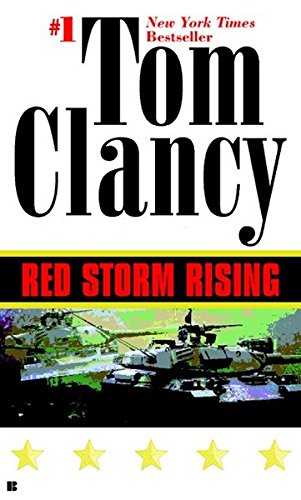
If you’re a regular visitor to A Certain Point of View, Too, you probably know I lived through the last 28 years of the Cold War. I’ve written extensively about how that tense era affected my psyche and informed my political stances, especially regarding U.S.-Russia relations and the need to maintain vigilance and our traditional alliances with NATO, Australia, New Zealand, and Japan. I’ve also discussed how informing myself about Soviet military capabilities and reading Cold War-turned-hot fiction (especially Sir John Hackett’s The Third World War: August 1985 and Tom Clancy’s Red Storm Rising) helped me cope with the existential angst of living under the threat of a real World War III which thankfully didn’t materialize.

In 2025, of course, the idea that a post-Soviet Russia would embrace Western-style democracy and be a reliable partner for peace with the U.S. and the West after the collapse of Communism in 1991 is a sad and overly rosy memory. Now, with Vladimir Putin still in power a quarter of a century after replacing Boris Yeltsin as President of the Russian Federation and doing everything he can to undo the post-1945 world order, I believe we’re in the midst of a second, more dangerous Cold War with our old adversaries in the Kremlin.

This, I suppose, is why I play computer games such as Regiments (2022, Bird’s Eye Games/MicroProse) and Sea Power; Naval Combat in the Missile Age (2024, Triassic Games/MicroProse). The old anxieties that lurked in the backdrop of my youth have resurfaced, and playing these games help me deal with them just as playing M1 Tank Platoon, Red Storm Rising, and Strike Fleet did between 1987 – the year I got my first home computer – and 1991 (the year the USSR dissolved).
Anchors Aweigh! Sea Power

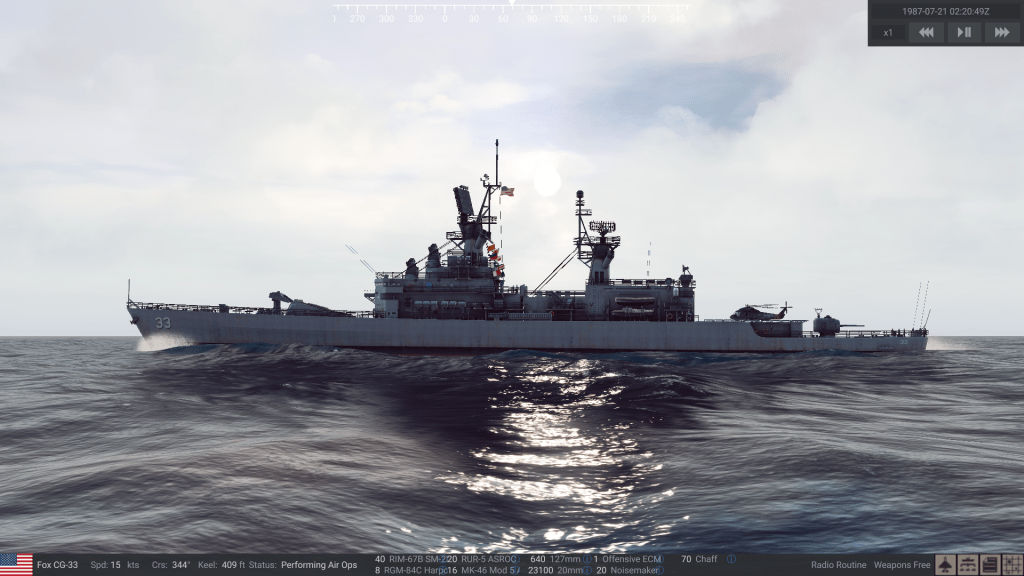
I purchased Sea Power: Naval Combat in the Missile Age in Early Access last November, fully aware that it was unfinished. Having previously enjoyed Lucasfilm Games/Electronic Arts’ Strike Fleet, Sonalysts Combat Simulations/Electronic Arts’ Fleet Command, and the more recent submarine simulation Cold Waters, I was willing to tolerate Sea Power‘s incomplete state and its associated peculiarities, such as challenges with damage control (notably on U.S. Navy ships, which are manned by sailors with exceptional damage control training and capabilities).

Sea Power is set approximately between 1960 and 1985; however, numerous scenarios—both within the “base game” and available through “mods” in the Steam Workshop—occur in the early 1990s. Most of the scenarios involve classic NATO versus Warsaw Pact “what if World War III had broken out?” situations, Sea Power offers a diverse range of missions for both adversarial fleets. Players can assume command of NATO task forces (primarily U.S., though other Allied navies are represented and additional ones are being added) or Warsaw Pact task forces in intense naval engagements.

Sea Power also portrays naval warfare in other conflicts from its timeline, including the Yom Kippur War, the Attrition War, the 1971 Indo-Pakistan War, the Tanker War in the Persian Gulf between Iran and Iraq, and U.S. confrontations with both Libya and Iran. The only significant naval conflict not depicted in Sea Power‘s base game is the Falklands/Malvinas War of 1982, likely because the developers had not yet created the necessary Royal Navy or Argentine naval assets.
Sea Power: Worthy Heir to Jane’s Fleet Command?
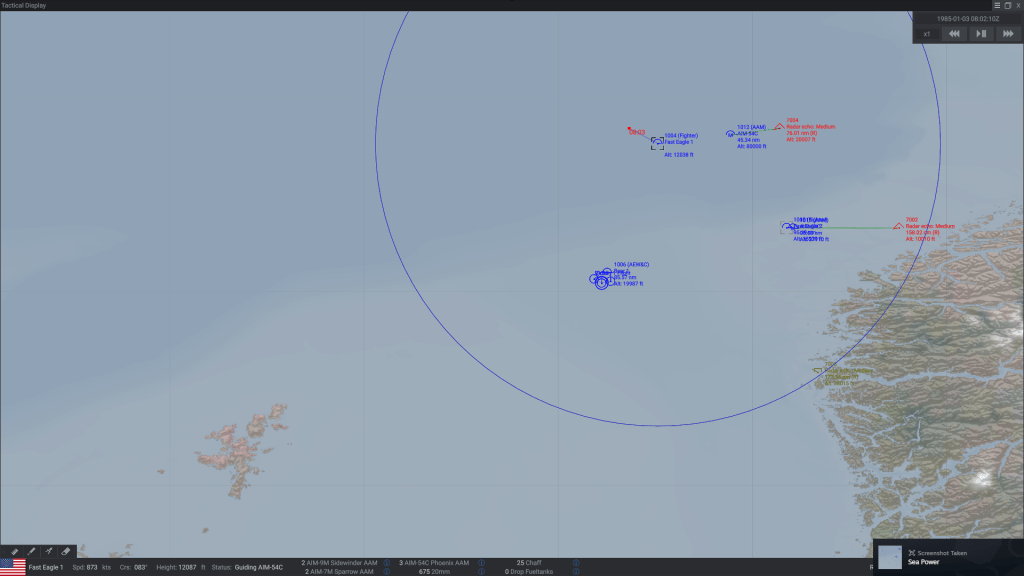
Like Fleet Command – and to a lesser degree, EA’s earlier Strike Fleet from the late 1980s – Sea Power blends real-time naval strategy with vivid visual representations of Cold War-era combat at sea, in the air, and even on the ground. Here, players can switch from the perspective of a ship or task force commander – depending on the scenario and assets available – in a combat information center with an animated tactical map, or as a detached spectator watching aircraft and missiles fly at high speeds toward their targets, or witnessing the death throes of vessels – friendly, enemy, or neutrals – struck by torpedoes, bombs, or missiles fired in anger.

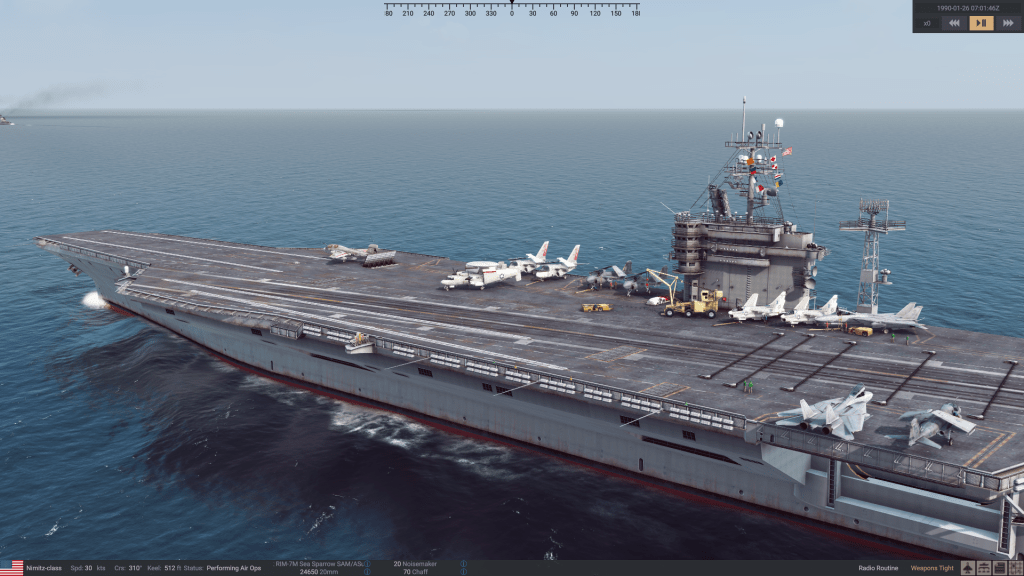
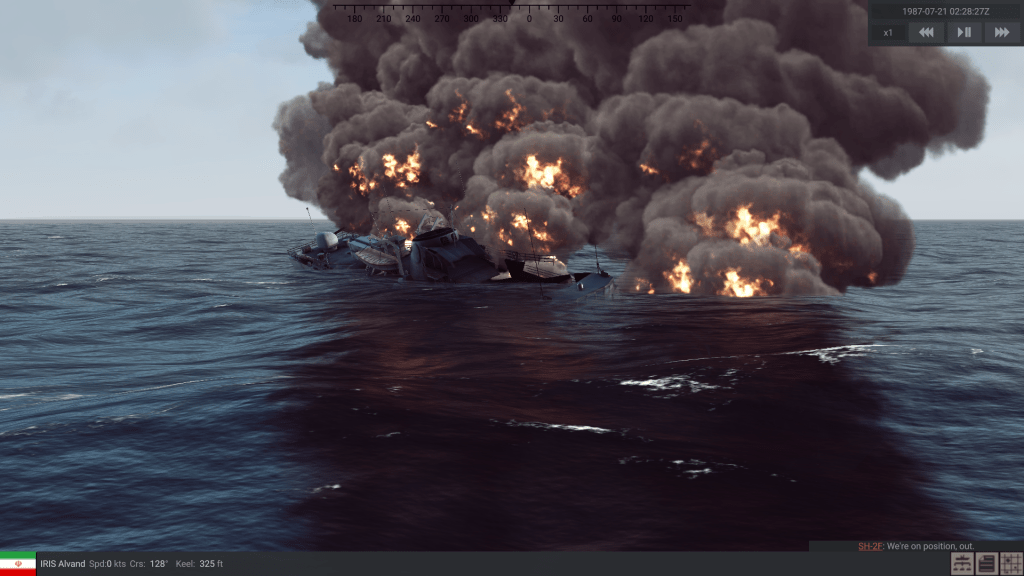
Visually, Sea Power closely resembles Killerfish Games’ 2017 title, Cold Waters, and this is no accident—Nils Ducker, the lead artist from Cold Waters, is one of the main developers for the new game. One of the features I appreciated about Cold Waters was its beautifully realistic 3D representation of naval ships, submarines, aircraft, and the maritime environments they inhabit. I’m pleased to report that Sea Power is visually stunning and incredibly realistic. I particularly enjoy how the aircraft are designed; they often showcase the liveries of their historically assigned squadrons, such as the Black Aces of VF-41 aboard USS Nimitz or the “Pukin’ Dogs” of VF-43 aboard USS Dwight D. Eisenhower.
Another impressive aspect of Sea Power is that it not only features historical vessels and aircraft relevant to its time setting, but also includes conceptual designs—such as the Soviet Orel-class “tactical aviation cruiser,” a nuclear-powered carrier that combined the capabilities of a Kitty Hawk-class conventional carrier with anti-ship missiles, circumventing the Montreux Convention’s restrictions on aircraft carriers in the Dardanelles Straits.

The game encompasses a wide range of historical and hypothetical naval and air operations, as well as various facets of naval combat, including fleet air defense, submarine warfare, anti-submarine operations, convoy escorts, amphibious landings, electronic warfare, and occasional special operations missions. For gameplay purposes, historical missions like Dong Hoi (which takes place during the Vietnam War’s 1972 “Spring Offensive”) are modified to enhance excitement for players, sacrificing some realism for entertainment.
Since a significant portion of naval combat entails traveling from Point X to Point Y across vast distances, Sea Power (like many naval simulations before it) includes time compression capabilities. This feature is particularly useful in lengthy scenarios that extend over an hour, which players previously had to either complete in one sitting or prematurely abandon, as the Save/Load functionality was only available in the live Beta version. Triassic Games has now added this feature in the latest update, released just yesterday.
However, Sea Power is not without its flaws. While air combat is visually impressive and theoretically simpler than in War on the Sea or Task Force Admiral, it still requires a significant amount of micromanagement, which ideally should not be the case.
Additionally, I have encountered issues where ships inexplicably leave your formation and behave erratically—such as stopping dead in the water in the path of a supertanker. While this doesn’t seem to significantly affect the tanker, it can lead more fragile ships like destroyers or frigates to their demise. These erratic behaviors would result in severe consequences for their captains in real life, likely leading to a desk job with no opportunities for promotion. However, players have been assured that these issues will be addressed over time.
Five months after its initial release, Sea Power is still in Early Access mode. The developers are open about their progress and are responsive to player feedback via Discord and the Sea Power subreddit. They are continuing to fix bugs, add new warships, aircraft, and weapons systems to existing factions, introduce new fleets (the Japanese Maritime Self-Defense Force was included in the latest update), and work on creating a dynamic campaign. Originally, this campaign feature was scheduled for the second quarter of 2025, but it has been postponed in favor of addressing other priorities, with a new date for its release yet to be determined.
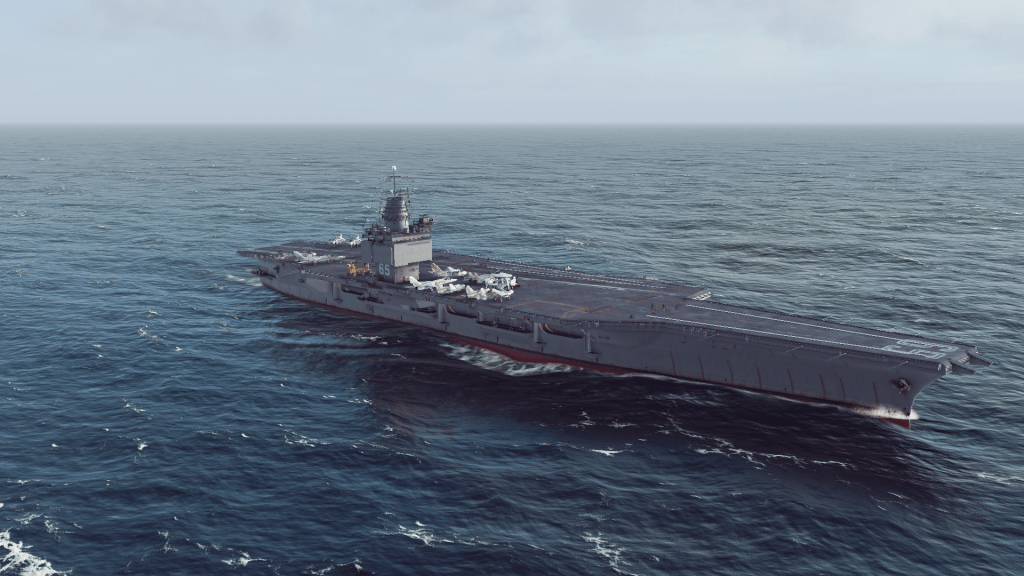
Even in its incomplete Early Access state, Sea Power has become my go-to computer game when I need to take a break from fixing and promoting my novel Reunion: Coda or to relieve stress or boredom. It’s more complicated than Strike Fleet or Fleet Command – the two games it most closely resembles – but it’s also challenging and fun to play. I can’t wait to see what new features Triassic Games’ team adds, and I also look on Steam’s Workshop for cool mods that showcase ships that weren’t in the original iteration of Sea Power, such as the USS Enterprise (CVN-65, not NCC-1701!), the U.S. Navy’s first nuclear-powered aircraft carrier.
 A Certain Point of View, Too
Comments
3 responses to “Old Gamers Never Die: Some More Thoughts on ‘Sea Power: Naval Combat in the Missile Age’”
Great choices!
–Scott
LikeLiked by 1 person
Thanks! I’m glad you enjoyed this sort-of review.
LikeLiked by 1 person
I definitely did, and you gave me one or two to give a try, so much appreciated!
–Scott
LikeLiked by 1 person